


虚实交融的建筑表达
Building Design and Presence
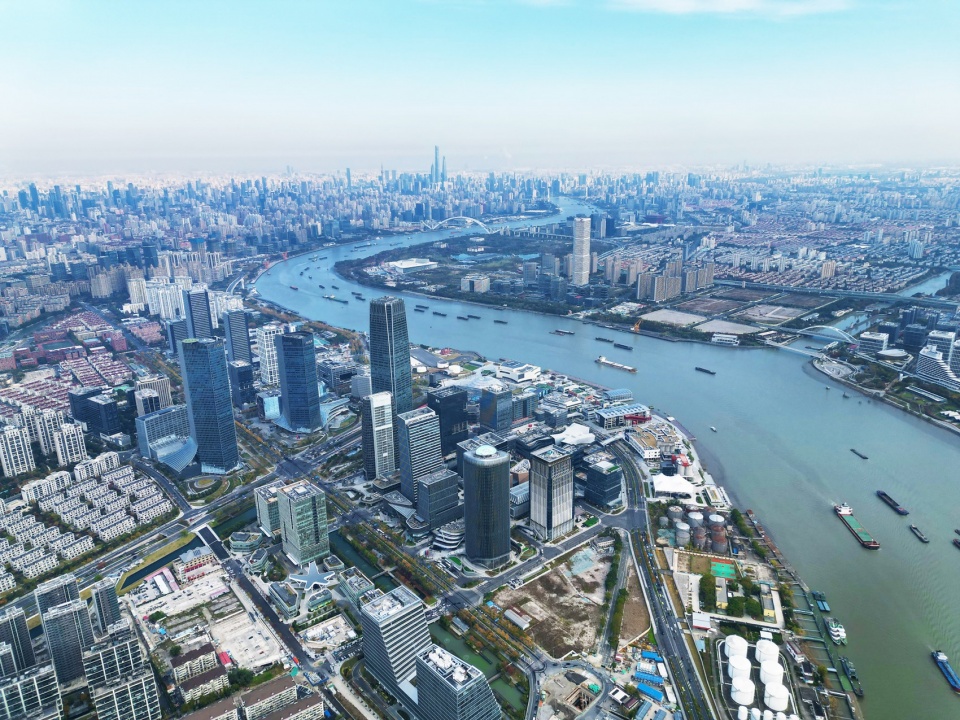
这座超高层建筑位于中国上海市黄浦江的西岸,坐落于尖端媒体与文化创意产业聚集的上海西岸传媒港的西南角。作为先进ICT企业与游戏产业基地,其设计旨在支持未来创作者的新型工作方式,同时激发城市的活力。
This super-tall building is located at the southwest corner of Shanghai West Bund Media Port, an area that is home to a concentration of cutting-edge media and cultural industries, on the west bank of the Huangpu River in Shanghai, China. It is designed to support the new working styles of future-oriented creators as a hub for advanced ICT (information and communications technology) companies and the gaming industry, while also revitalizing the city.
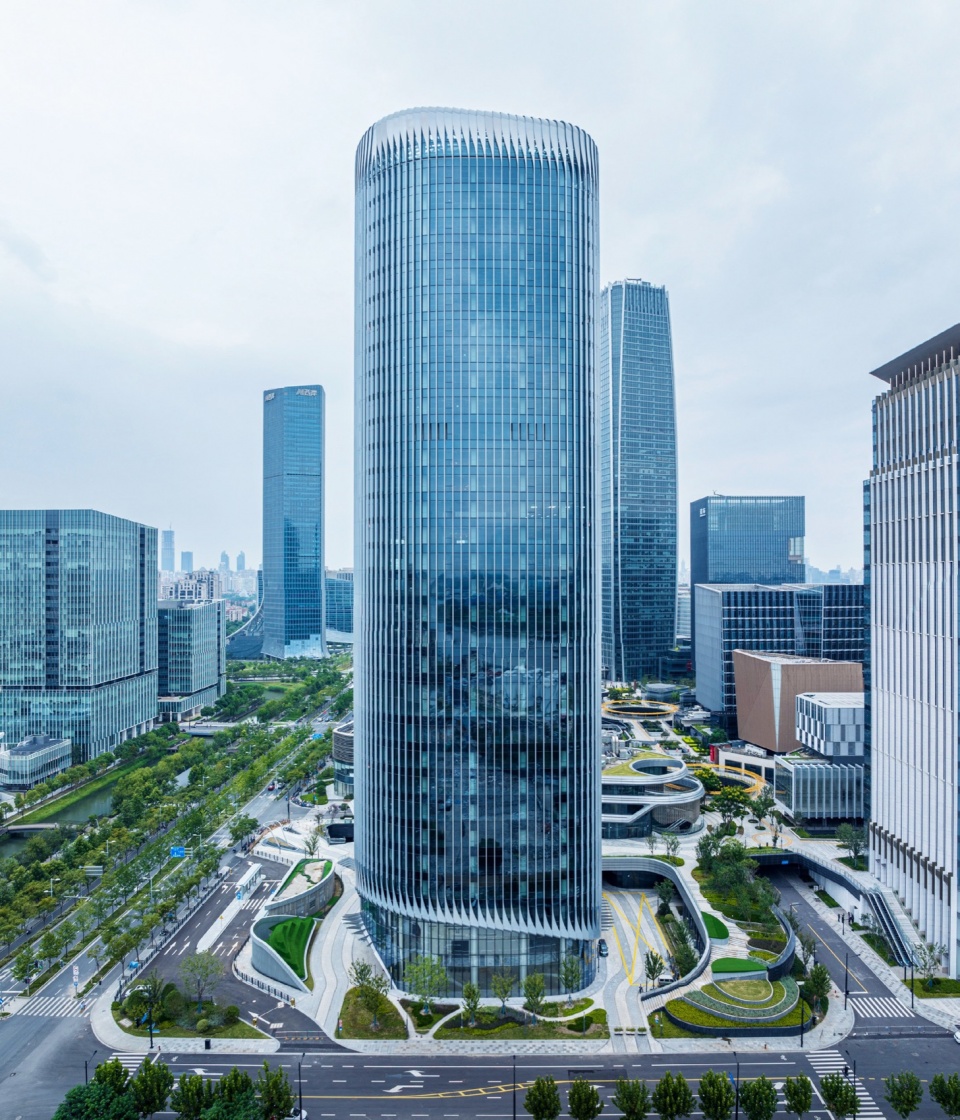
▼场地鸟瞰,Aerial view of the site © yangmin/mintwow
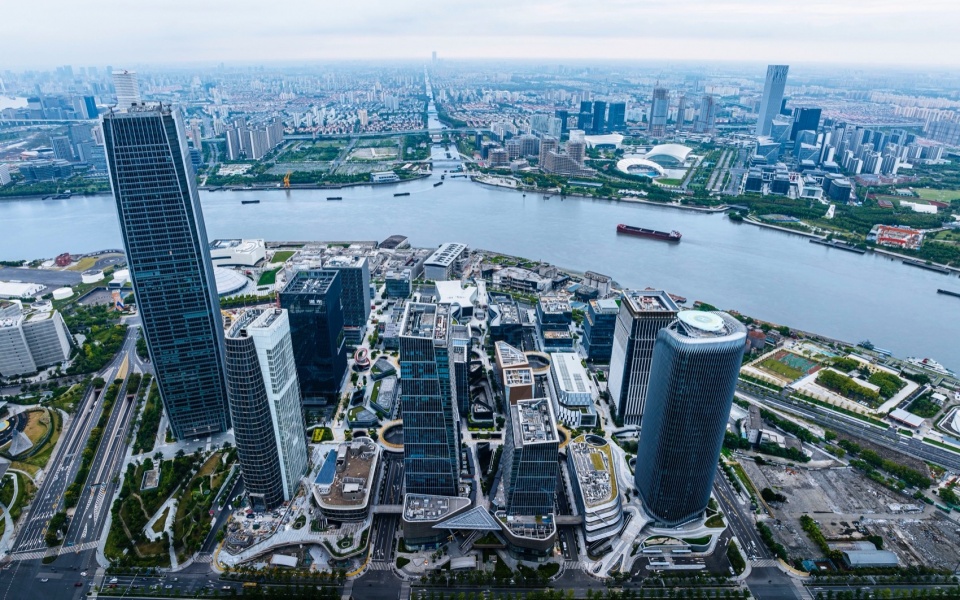
除开发和办公功能外,该建筑还配备了展示厅与产品发布厅等空间,既能将线上聚集人群的世界观具象化,又能为创作者与粉丝之间实现线下交流的企业活动生态系统提供支持。该建筑不仅能激发新的创意,还能发布产品,并能通过创作者和粉丝的交流建立人际联系,具备将虚拟与现实世界相连接的功能。
In addition to its development and administrative functions, the building features showrooms and halls for product launches, embodying the worldviews of people who convene online and fostering an ecosystem of corporate activities where creators and enthusiastic fans can interact in person. The architecture gives birth to new ideas and product launches, and also fosters human connections through interactions between creators and fans, thereby serving as a bridge between virtual and real worlds.
▼建筑概览,Overall view of the building © yangmin/mintwow
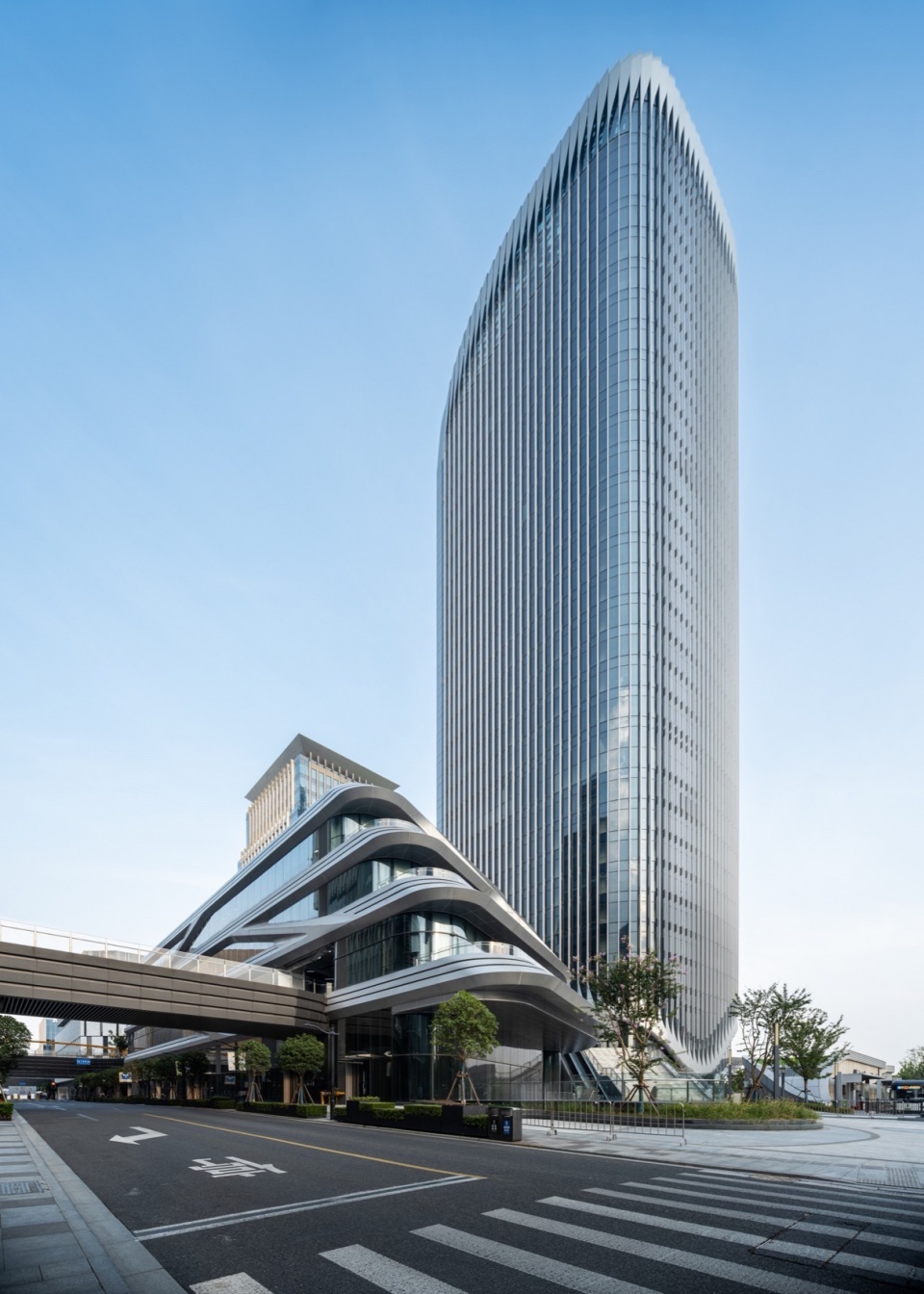
大楼外观以具现星云一般的柔和形态呈现出存在感。从任何角度都能看到的独特天际线为城市景观增添了新的魅力。地块内的公共空间不仅向建筑使用者开放,也向街区访客开放,通过提供安全的动线与休憩场所,使建筑本身强化了企业与城市融合的概念。
The building’s exterior has a soft presence, resembling a tangible manifestation of an online cloud. Its distinctive skyline is visible from anywhere in the city, adding a new charm to the landscape. By opening the public spaces within the premises to both building users and city visitors, the building provides safe access and a place to gather, reinforcing the concept of “the company and the city.”
▼开放公共空间,Opening the public space © yangmin/mintwow
远、中、近的设计方法
Approach to Supertall Building Design
在这座超高层建筑的设计中,我们考虑了在远景、中景和近景三个层面都令人愉悦的设计。在远景层面,我们注重“城市景观的呈现方式与独特的天际线”;在中景层面,我们强调“场地内可体验的规划布局及超高层建筑形态”;近景设计则在“动态建筑造型所创造的功能与细节”上下足了功夫。
This supertall building is designed to delight people from near, medium, and far distances. From a distant view, we focused on the city’s appearance and its distinctive skyline, while from a medium view, we emphasized the layout plan and building’s appearance as experienced on site. In the foreground, particular effort was put into the functions and details created by the building’s dynamic form.”
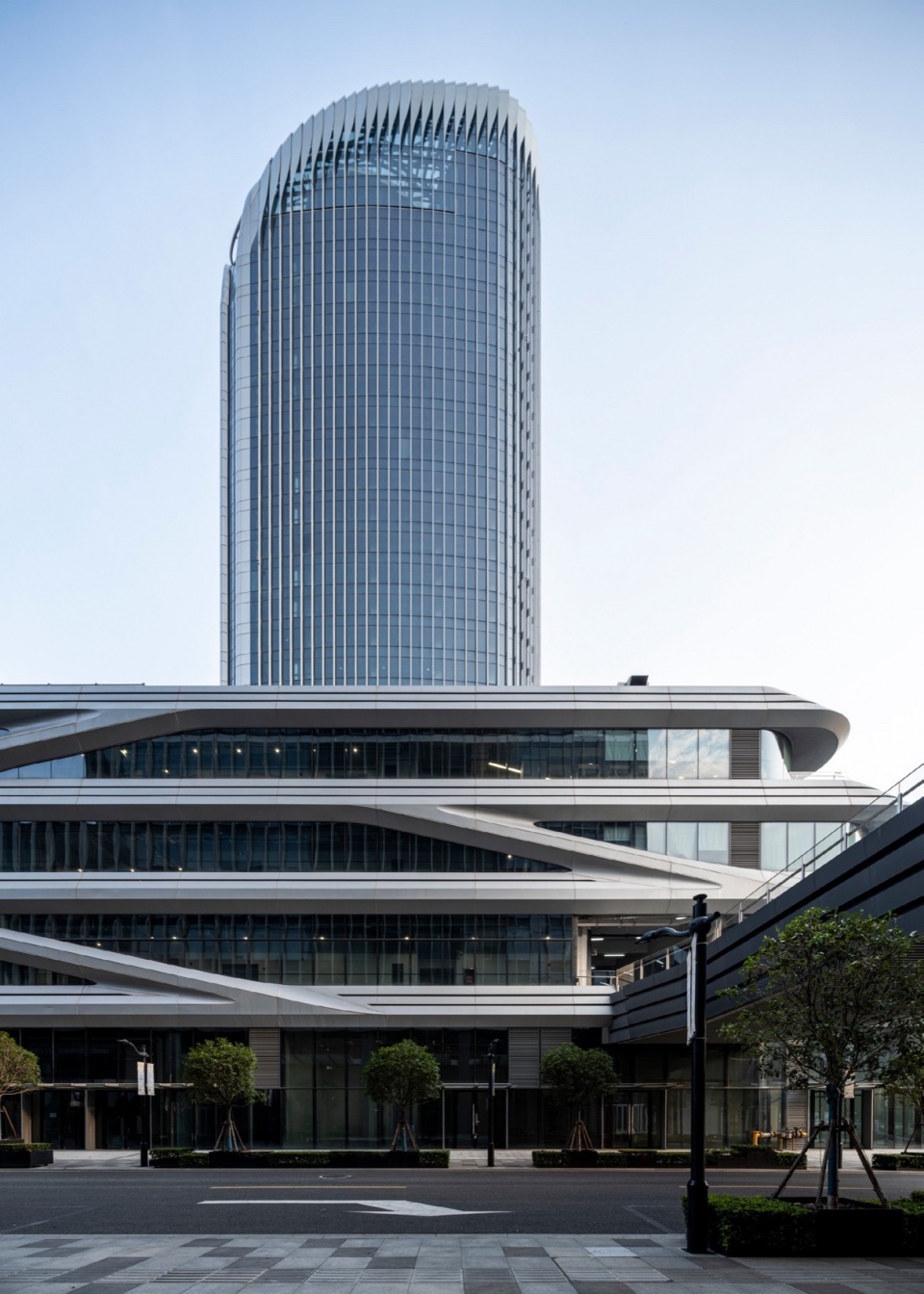
▼建筑立面设计,Architectural facade design © yangmin/mintwow
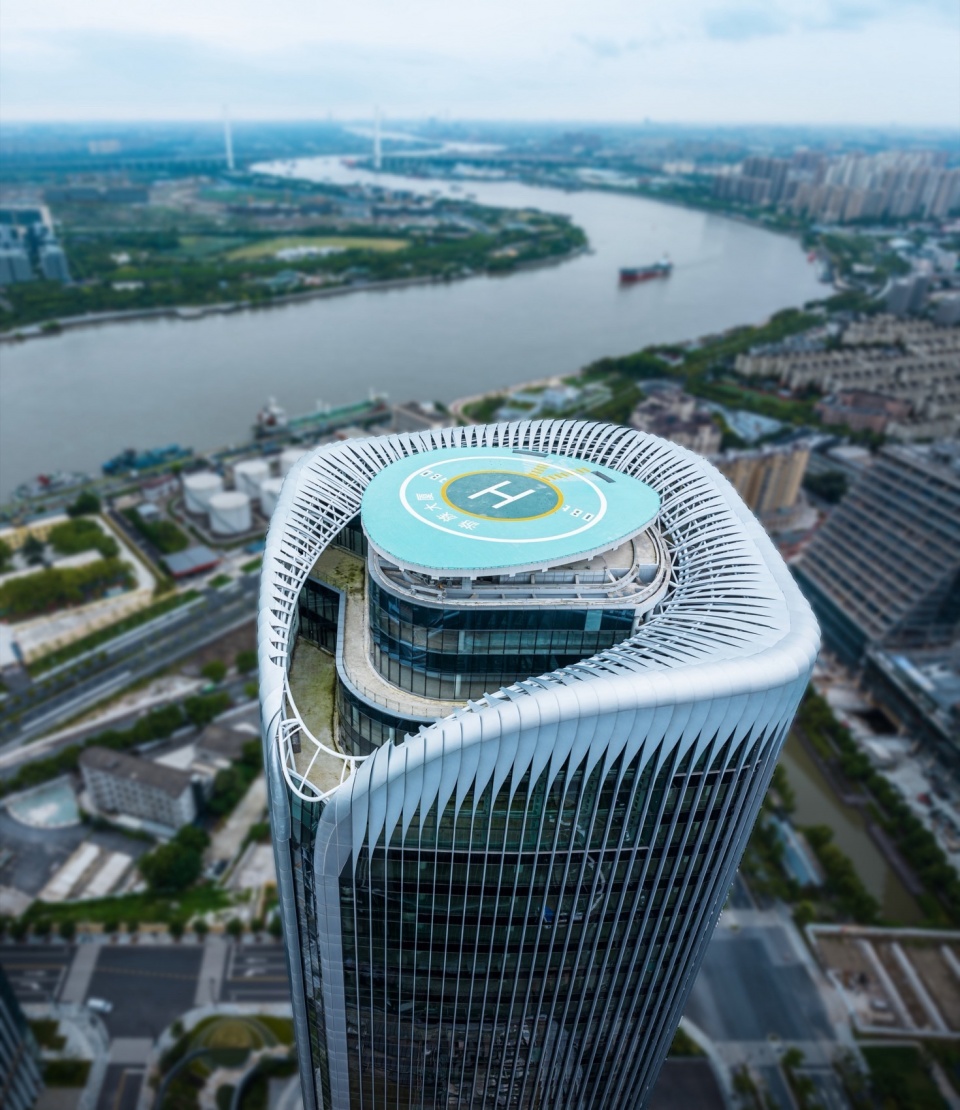
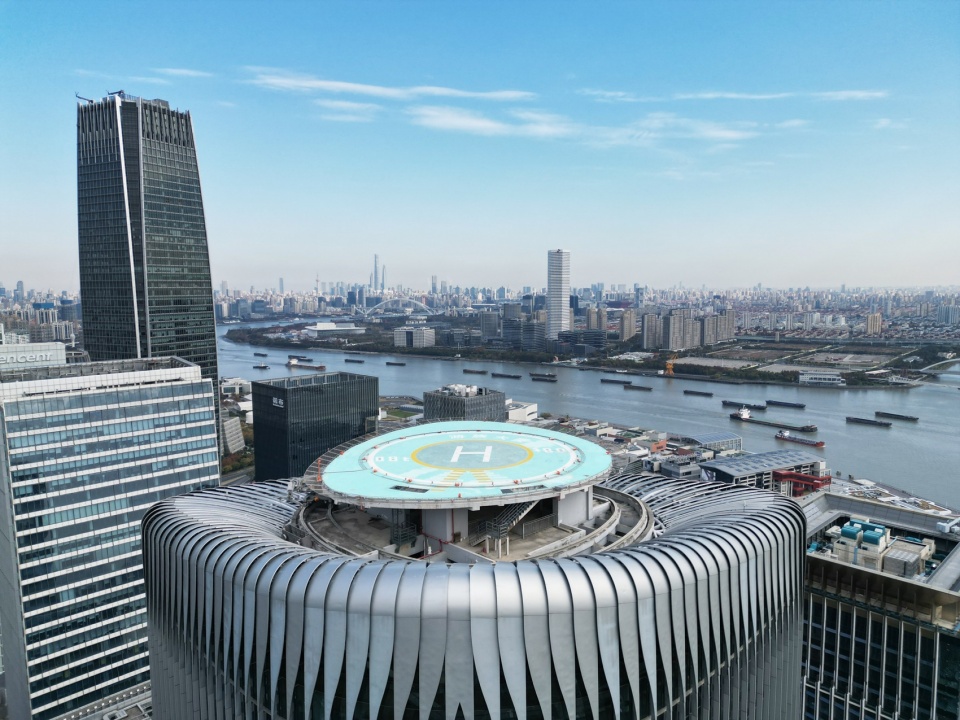
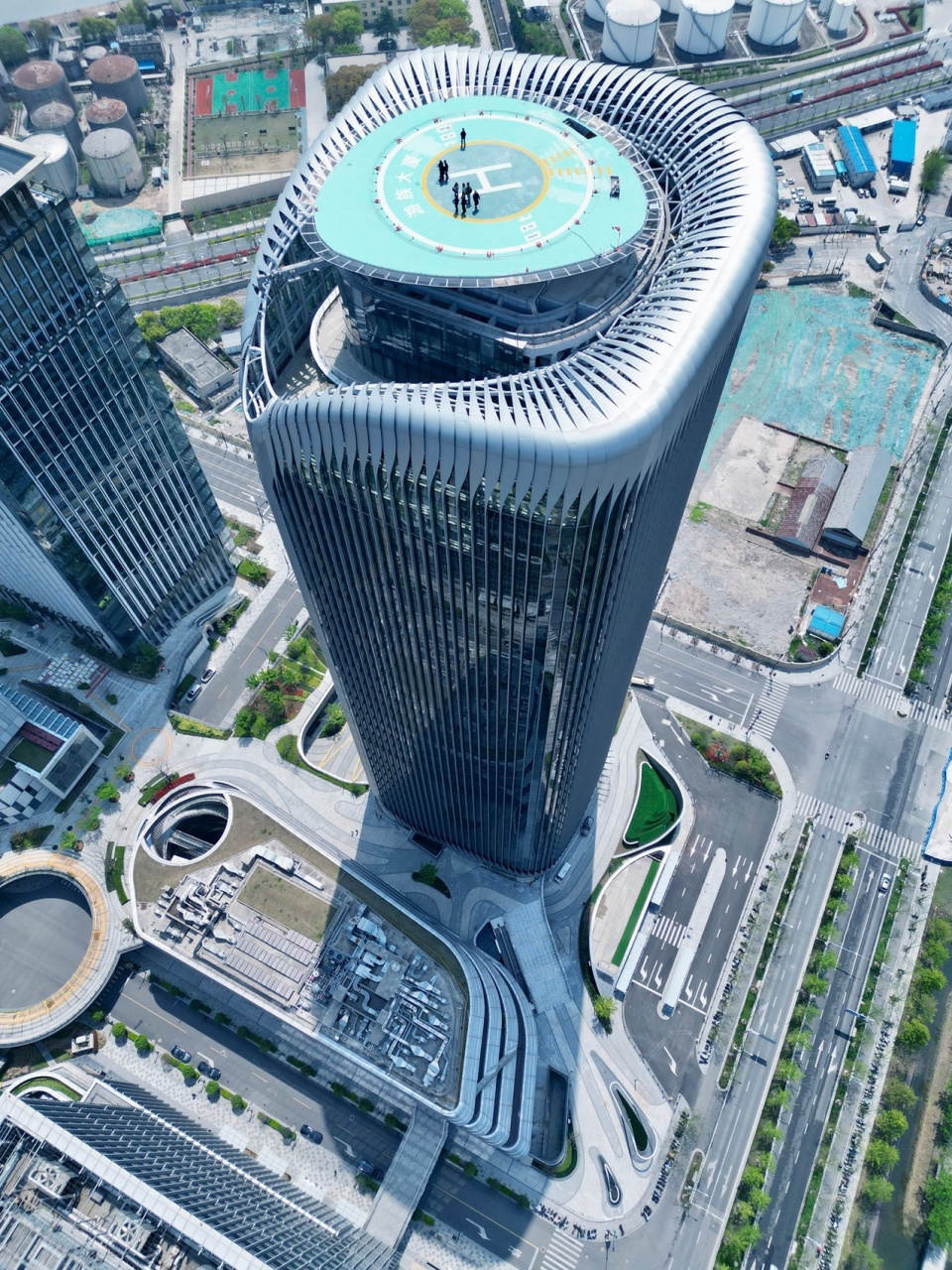
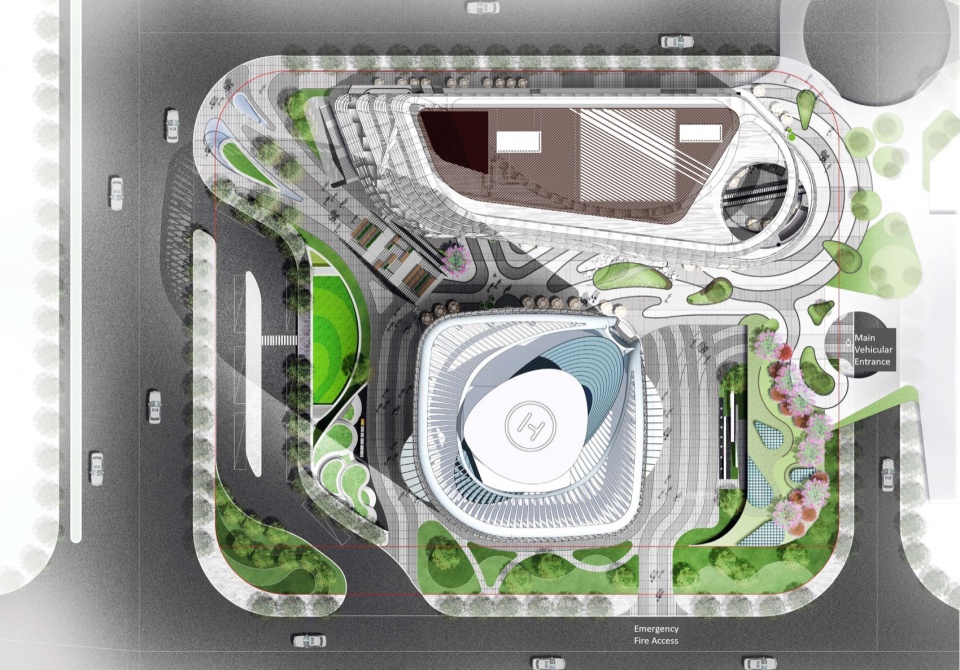
建筑顶部作为近年来普及的航拍视角下的第五立面,采用了整合屋顶花园、160m高空直升机停机坪观景台、维护机器收纳空间及空调机位等多项功能的设计。在该地区建造的超高层建筑中,塑造出尤为柔美的天际线。
In response to the aerial view perspective that has become commonplace in recent years, the top of the building is designed as the “fifth façade.” This space integrates multiple functions, including a rooftop garden, an observation deck with helipad at 160 meters above ground level, storage for maintenance machinery, and an air conditioning machinery room.Among the skyscrapers in this area, it forms a particularly soft skyline.
▼第五立面,fifth façade © yangmin/mintwow
▼第五立面,fifth façade © Nikken Sekkei
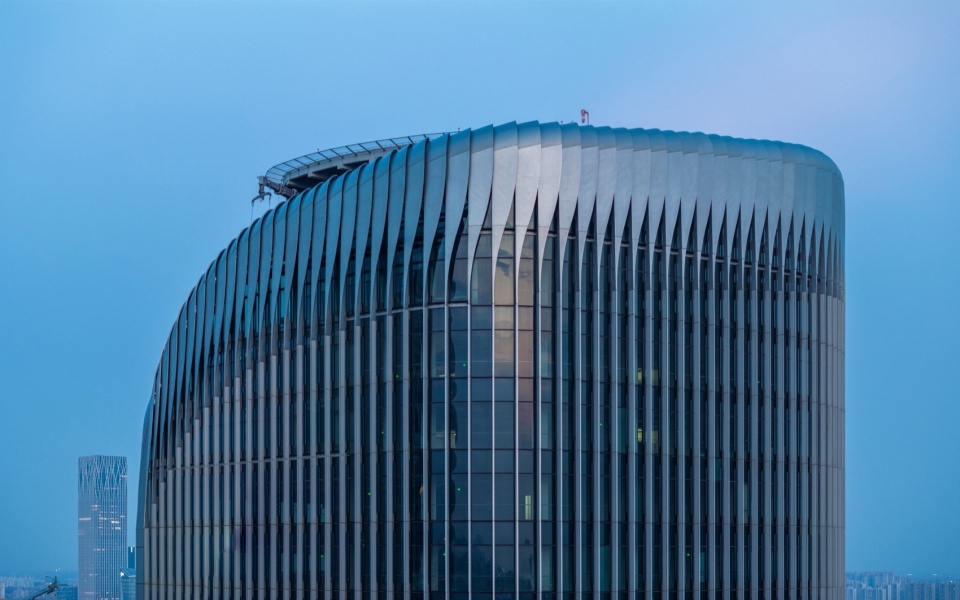
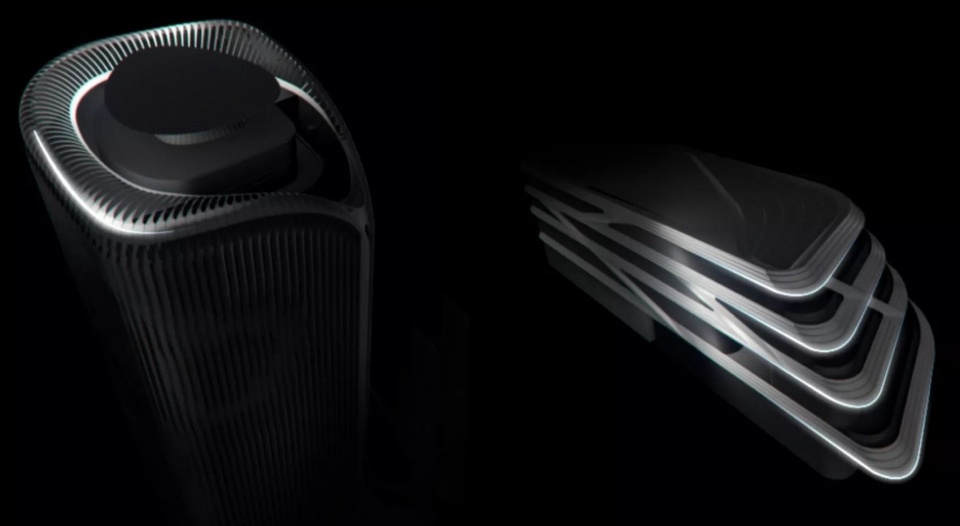
从顶部连接的覆盖建筑外壳的板片,作为根据时间段从不同角度接收阳光、呈现出不同视觉效果的百叶,以半径130m的弧形变化排列。为了精确捕捉反射光,我们在400mm宽的百叶侧面以18mm的间距刻上了肋纹。
The fins that cover the building’s structure and extend to the top are louvers that alter their configuration and appearance depending on the angle of the sunlight at different times of the day. They are arranged in a 130-meter radius arc. 18-millimeter pitch ribs were carved into the sides of the 400-millimeter-wide louvers to delicately capture reflected light.
▼百叶根据阳光的角度变化, Louvers alter depending on the angle of the sunlight © Nikken Sekkei
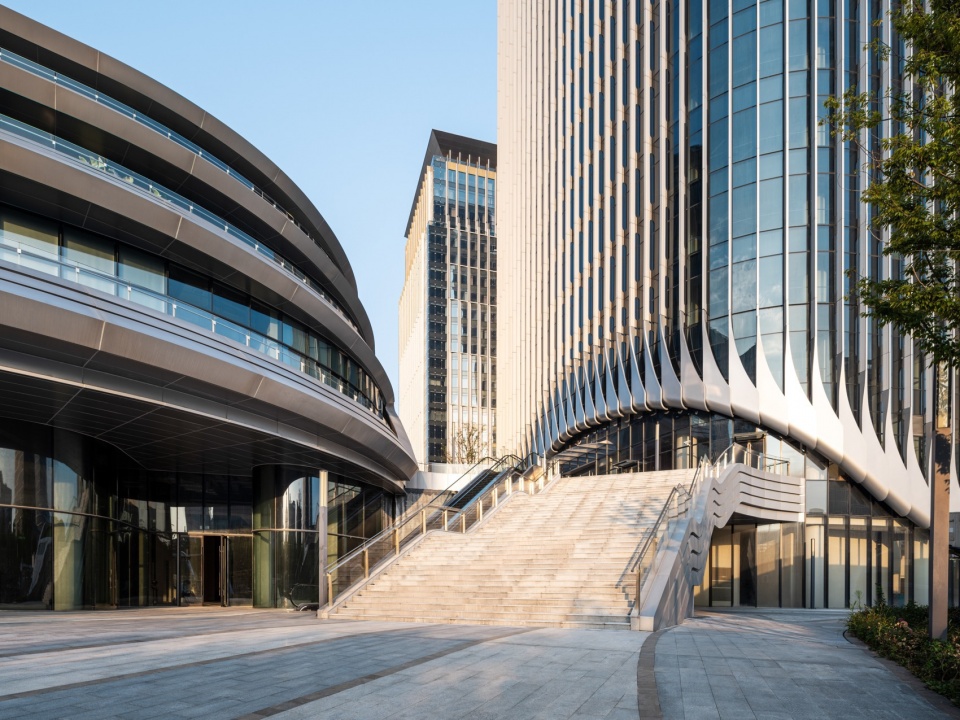
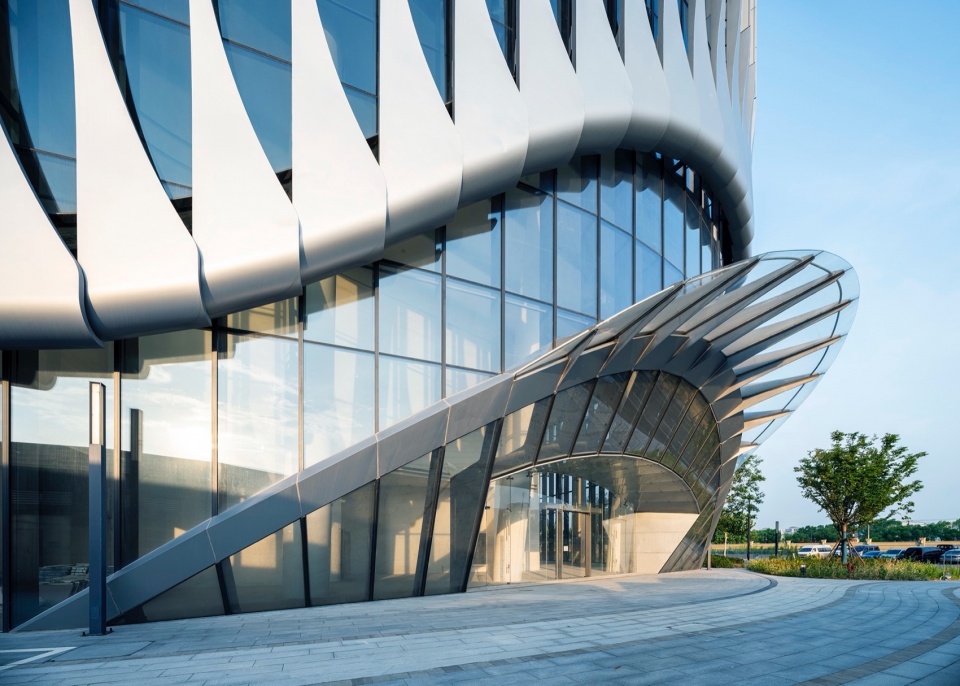
在低层部分,通过将建筑入口处的外立面抬升至两层高度,呈现出欢迎到访者的姿态,并通过明确指示入口和动线的位置,以确保到访人群无障碍地自由移动。入口处高差9m的外立面变化,采用了1.5m宽的羽状叠层设计,体现了大楼迎接人们到来的好客姿态。
In the lower sections, the building’s entrance facade is raised by two stories to create a welcoming gesture and clearly indicate the location of the entrance and pathways, ensuring visitors can move freely without getting lost. The 9-meter elevation difference in the entrance facade features a generous 1.5-meter-wide overlapping wing design that embodies the building’s “people friendliness.”
▼入口呈现欢迎的姿态,Entrance creates a welcoming gesture © yangmin/mintwow
连接城市、构建文化创意网络
Creating Connections with the City and a Network of Culture & Creativity
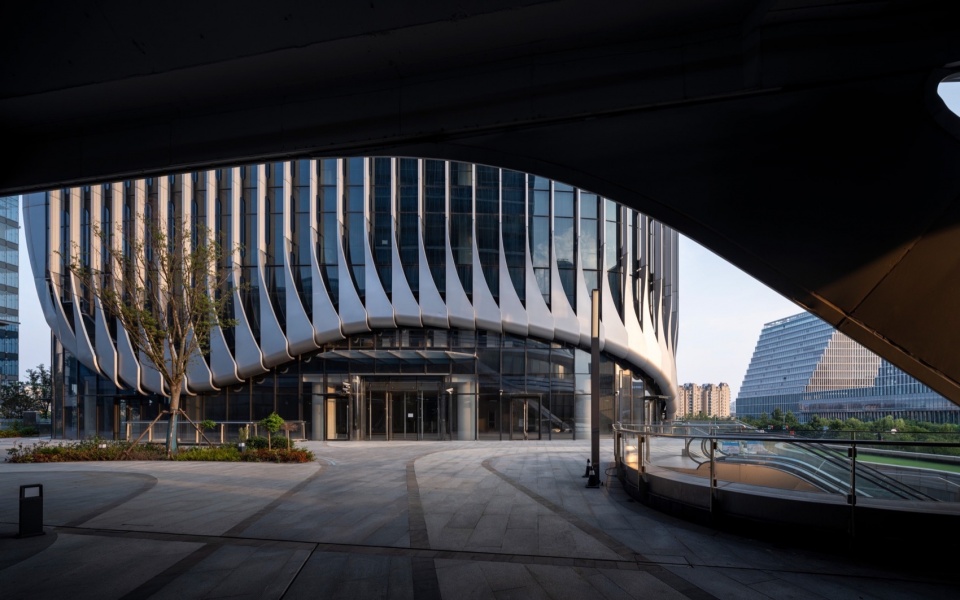
这栋超高层建筑作为街区西南部的大门,向访客全面开放了场地内的公共空间和道路。建筑周边的公共空间没有被局限在地块内,而是通过积极连接邻地和共享空间,来支持城市人际网络,并强化整个区域作为文化创意产业聚集地的作用。设计旨在将超高层建筑超过76,000㎡的建筑面积与周围的城市环境连接起来。为此,我们对建筑与地面之间的连接进行了精心设计。
This skyscraper, which serves as the southwestern gateway to the district, is fully open to visitors, with public spaces and walkways within the grounds. Rather than enclosing the public spaces around the building and within the grounds, it actively links to neighboring properties and shares space. This supports the city’s human network and strengthens the role of the entire area as a hub for cultural and creative industries. Its 76,000 square meters of floor space connect with the surrounding urban environment. To achieve this, the link between the building and the ground level link has been carefully designed.
▼开放的公共空间和道路,Fully opened public spaces and walkways © Nikken Sekkei
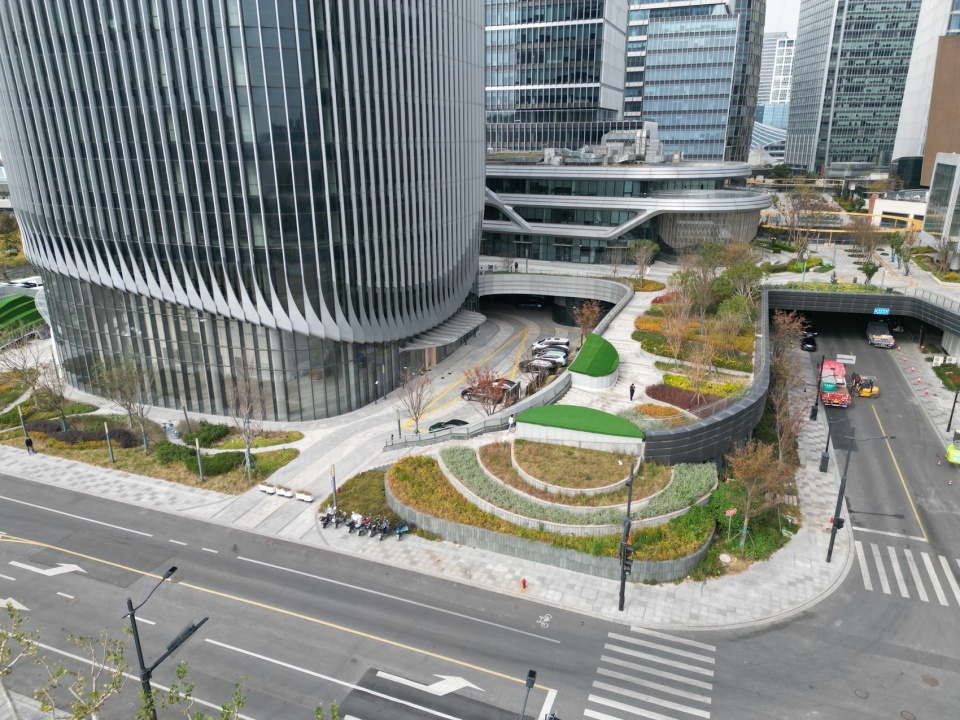
连接超高层塔楼与裙楼的平台是为街区访客们提供的公共空间。通过与立体连接地下街、地面1层、2层这3层的“城市核”即裙楼建筑一体化,人们可以从任何地方访问建筑,也可以在各自的高度上自由移动。
The deck connecting the skyscraper tower and the podium serves as a public space for visitors. The “Urban Core,” which connects the underground and first and second floors three-dimensionally, is integrated with the podium architecture, allowing access the building from any direction and freedom of movement between different heights.
▼裙楼建筑一体化, The podium and building is integrated © Nikken Sekkei
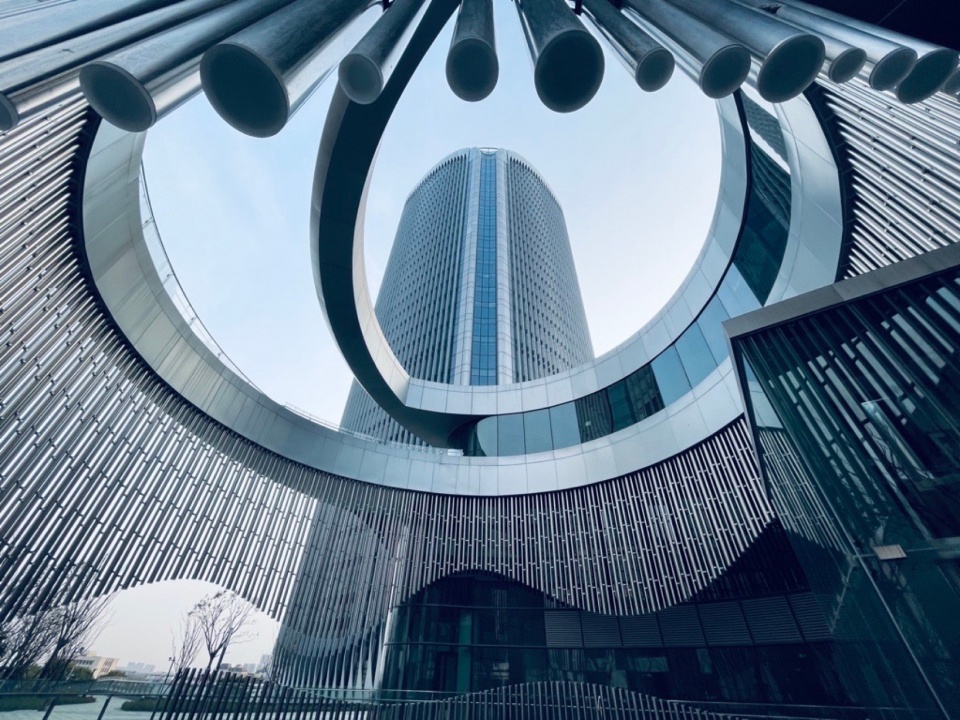
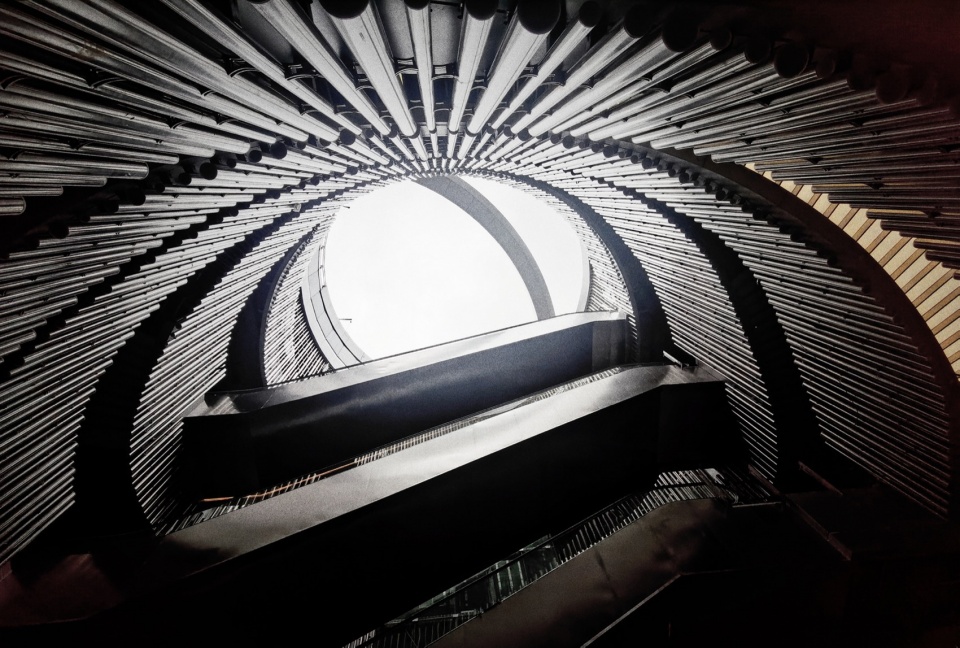
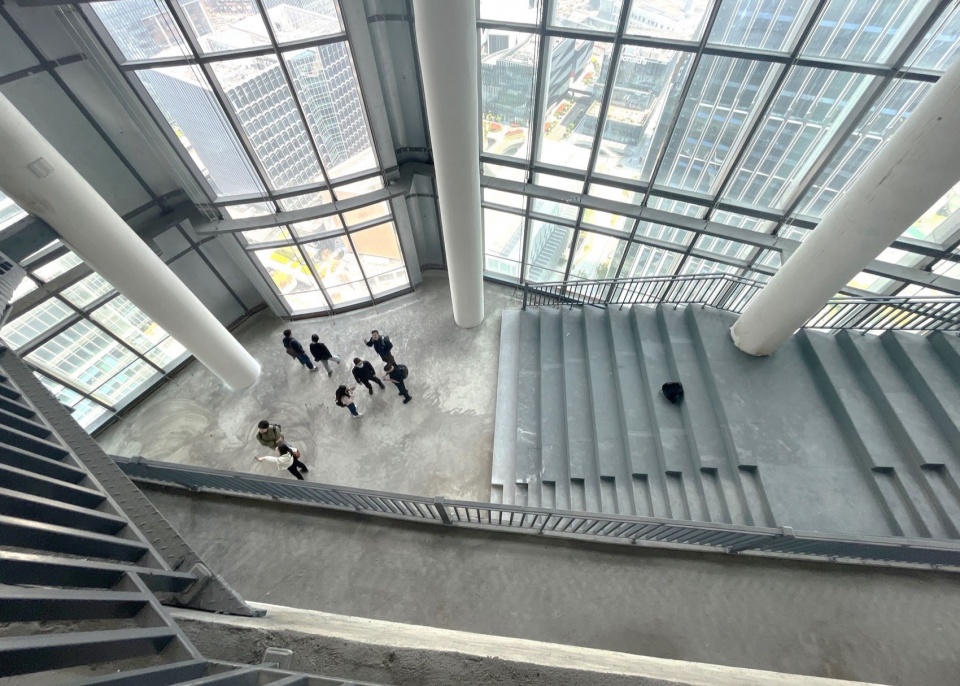
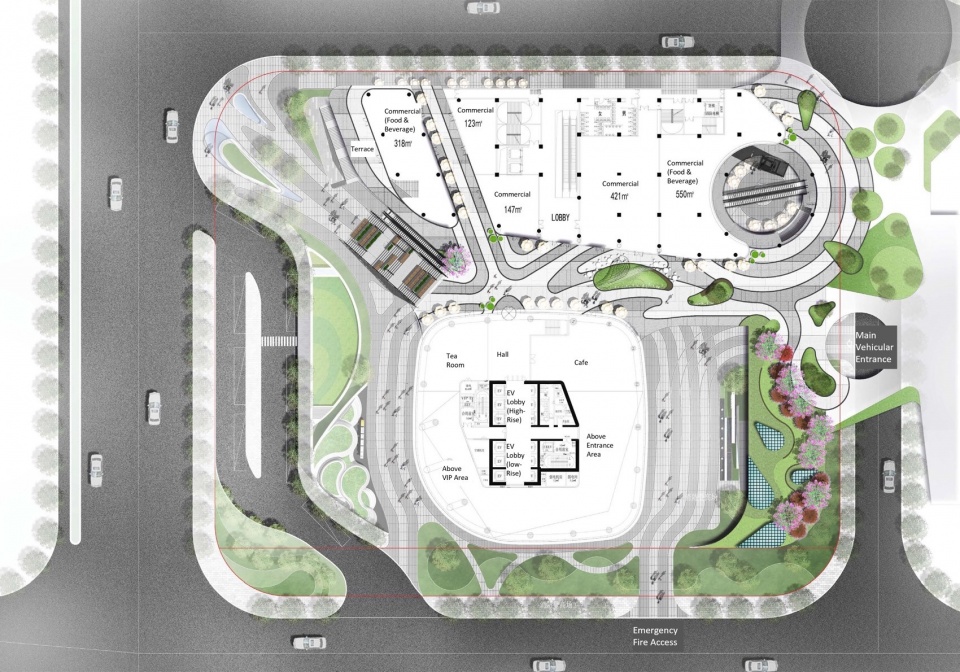
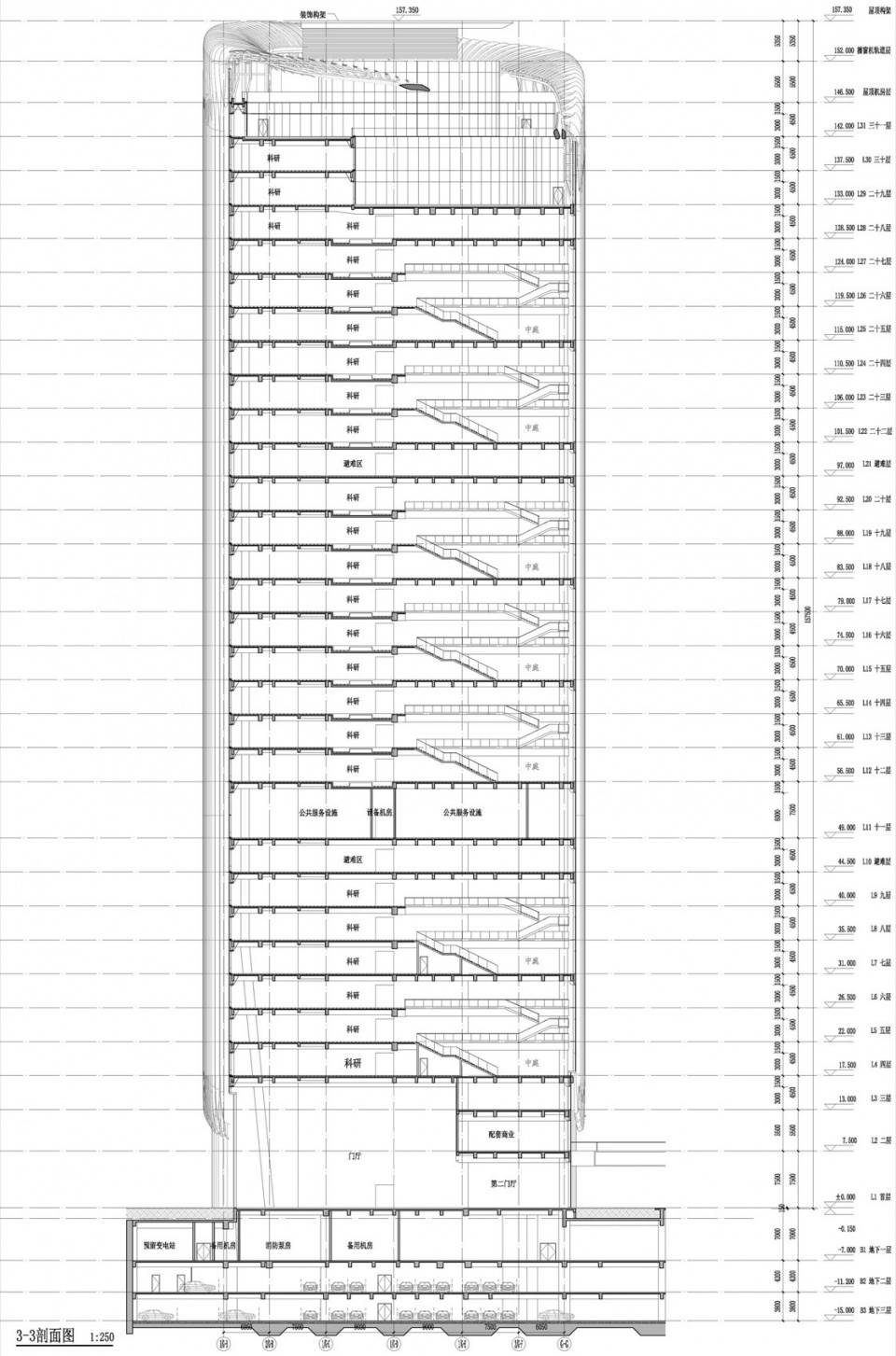
二楼的步行平台向外延伸,与景观融为一体,并进一步延伸至场地之外。在连接周围建筑的同时,为人们提供了自由的公共空间。为了方便人们移动和轻松进入建筑,在确定建筑的布局和形状的同时也考虑到了与周边地块的连接。在标准层层叠设置了7个挑空3层的空中庭院(相当于21层高),挑空空间作为到达大厅通过大的观景窗口与城市在视觉上相连。
The second-floor pedestrian deck expands to blend in with the landscape and extends beyond the site boundaries. While connecting with surrounding buildings, it provides free (public) spaces. The building’s layout and shape were designed to facilitate movement and access by considering connectivity with the surrounding site to facilitate movement and access. Seven sky lobbies with three-story atriums are stacked over 21 floors, with each atrium serving as an arrival hall with large windows that visually connect to the city.
▼裙楼建筑一体化, The podium and building is integrated © Nikken Sekkei
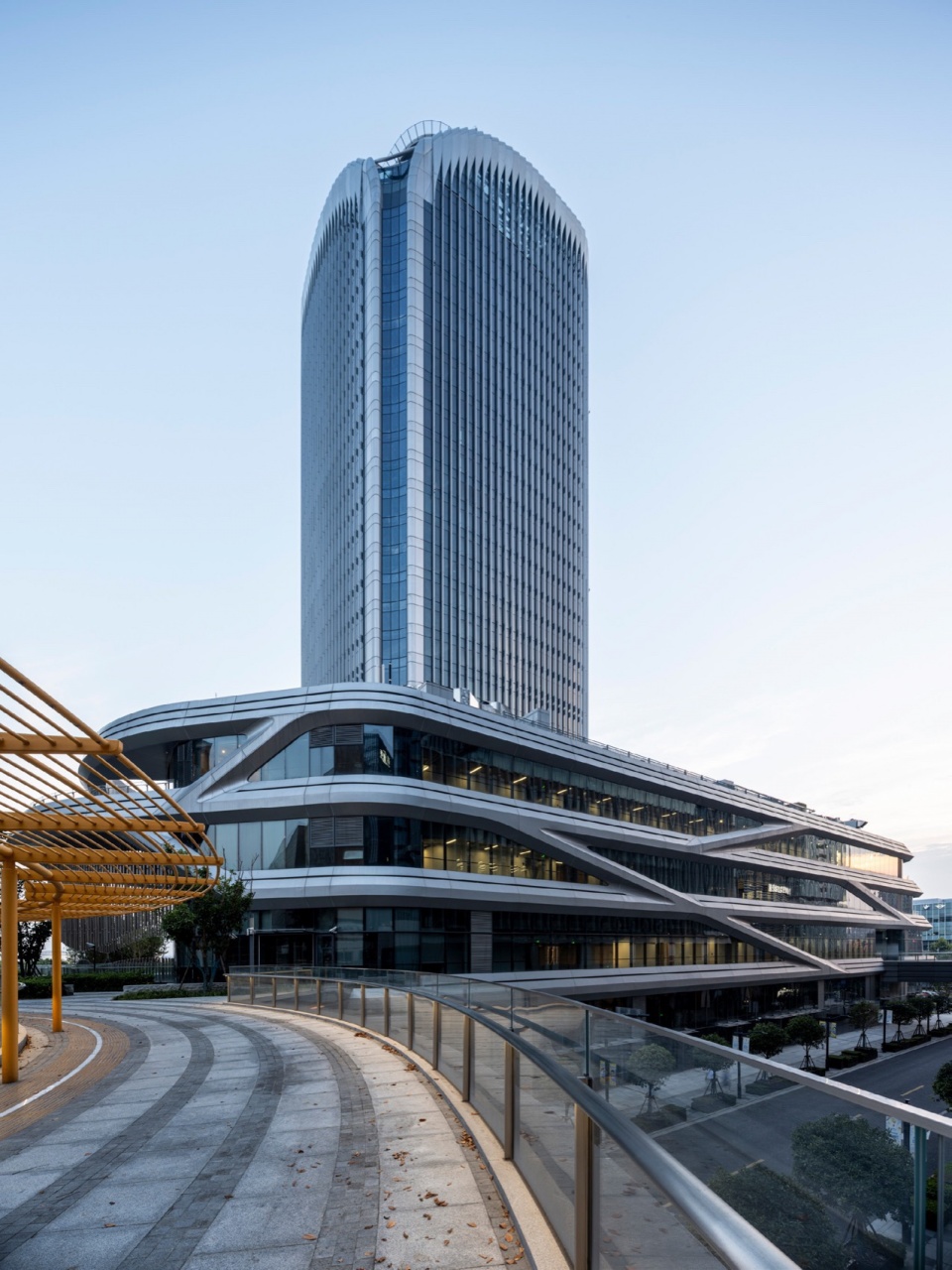
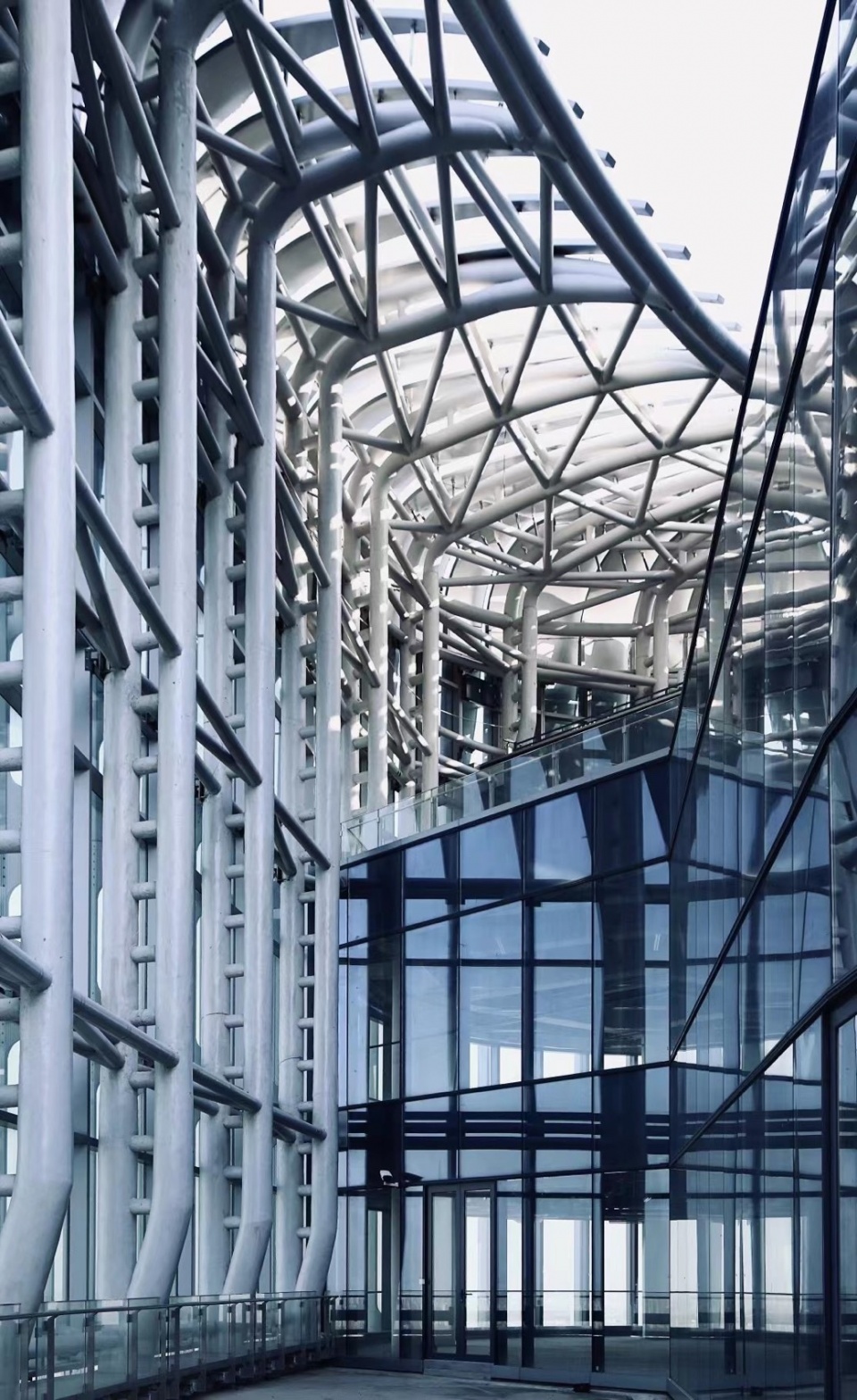
大楼并非封闭式的结构,其顶部设有两层可以通往外部的屋顶露台。此外,直升机停机坪与空中航线相连,将建筑体验进一步延展向天空。该项目没有局限于场地内部,而是通过建立与城市的利他性关系,成为促进人际交流、颂扬城市生活与互动的建筑。
The building is not a “closed structure” per se; its two external rooftop terraces allow access to the outside. Additionally, it connects to air routes via a helipad, opening the building’s architecture toward the sky. By fostering a mutually beneficial relationship with the city beyond the site boundaries, the architecture promotes interaction among people, celebrating life and exchange within the urban environment.
▼屋顶露台,rooftop terraces © Nikken Sekkei
环境考量与可持续性
Consideration for the Environment and Sustainability
我们的目标是充分利用上海的温暖气候,打造一座开放且可持续的建筑。与传统封闭环境下完全依赖空调的能源消耗型高层建筑相比,该建筑在室内外拥有更多的非空调区域。此外,在仅使用玻璃、铝合金等常见安全材料的同时,我们追求能够凸显超大型超高层建筑特有规模感的细节表现。我们选择合理的材料应用与装配方法,在避免建设过程中能源浪费的前提下,成功实现了独特的设计。
In this project, we aimed to create open and sustainable architecture that takes advantage of Shanghai’s warm climate. Compared to conventional high-rise buildings with closed, fully air-conditioned energy-consuming systems, this building has many non-air-conditioned indoor and outdoor areas. While using only safe, readily available materials such as glass and aluminum, we pursued a level of detail that is possible only with the scale of a spacious skyscraper. We efficiently achieved a distinctive design during the construction phase using materials and methods that minimize waste.
▼合理的材料与方法来实现节能,Using materials and methods that minimize waste © Nikken Sekkei
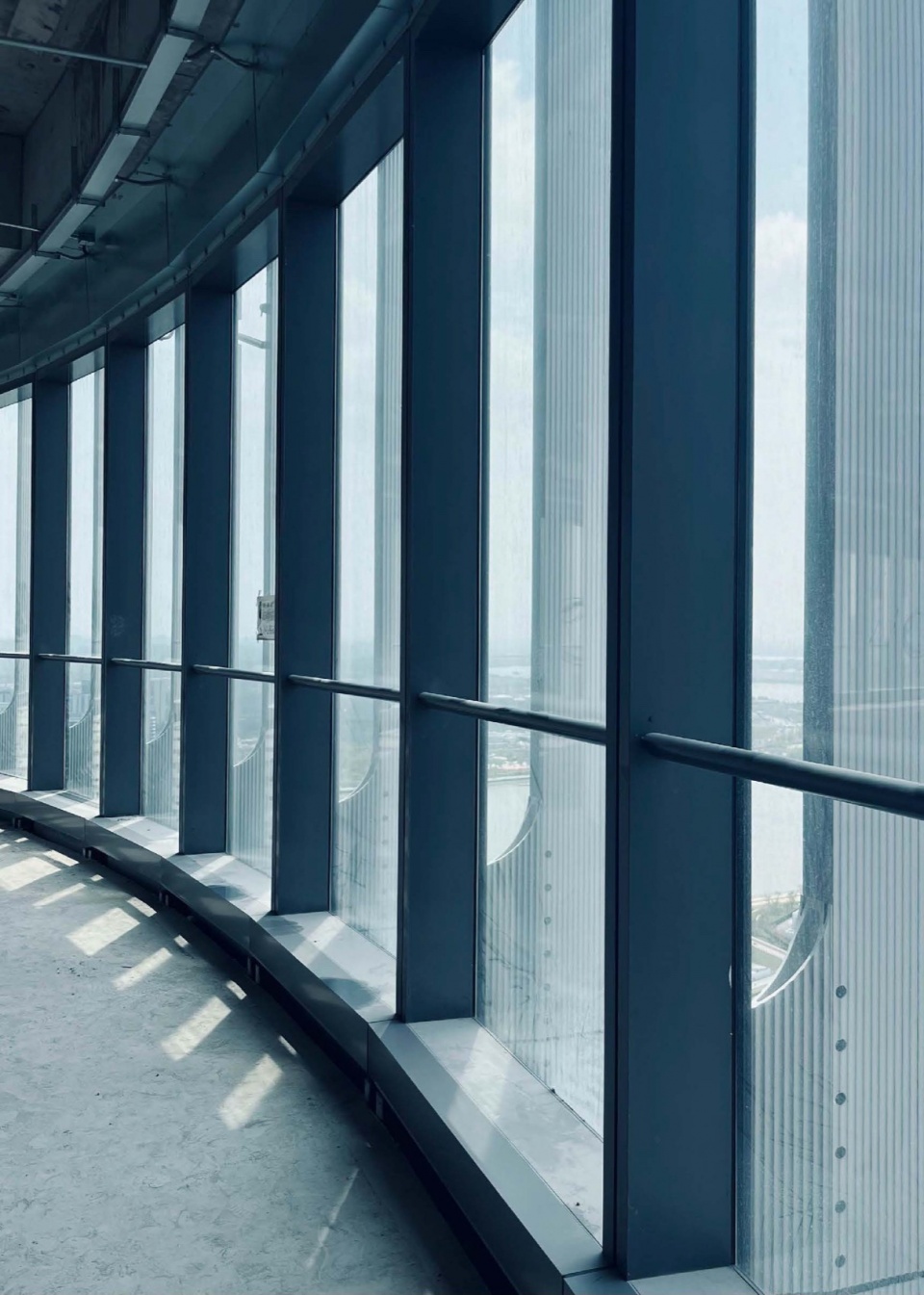
为了提高空调能效,通过将标准层400mm进深的外立面装饰条向外探出200mm安装,在减少铝材使用量的同时,实现了与600mm深装饰条同等的遮阳效果。与Low-E玻璃组合使用,可以防止能量过度流入,减少经由窗户发生的能量损失,从而节省不必要的空调能耗。此外,还在窗边安装了自然通风装置,通过人为开窗的主动行为利用该区域导入风,借助挑高空间的气压差无需动力即可促进标准层的整体通风。
To enhance the energy efficiency of the air conditioning, the standard 400mm-wide exterior fins were extended by 200mm outward, reducing aluminum usage while achieving the same solar shading effect as 600mm-deep fins. Combined with Low-E glass, this prevents excessive energy influx, reduces energy loss through windows, and minimizes wasteful air conditioning energy consumption.Additionally, natural ventilation hoppers are integrated near the windows. This allows occupants to leverage the steady local wind by opening windows themselves and promotes natural ventilation through pressure differences in the atrium, without mechanical power assistance.
▼节能的立面细节,Energy-saving facade details © Nikken Sekkei
共享共赢的未来姿态
Positive Design Chain
柔美的造型和丰富的公共空间通过为访客提供能够无障碍移动的舒适场所,改变了实际的街区体验,并促进了地区的活性化与交流。这座高层建筑既是先进企业的总部,又对城市展现出利他的姿态,发挥着城市枢纽的作用。
The soft forms and rich public spaces of this project provide visitors with a place to relax, allowing them to move around comfortably without getting lost, altering their actual city experience and promoting regional revitalization and interaction. This high-rise building serves as the headquarters of a leading company, but it also has an altruistic “attitude” toward the city in its role as a hub.
▼交通中庭,Traffic atrium © Nikken Sekkei
通过唤醒建筑所具有的积极特质,超越与邻地的利害关系,将其视为共同推动城市发展的伙伴,并期望对周边其他建筑产生积极影响。这种建筑所展现的利他主义态度超越了单一建筑,成为整个传媒港培育公共空间与文化交流的象征性姿态,勾勒出都市生活的新愿景。星云1号大厦以其前瞻性的设计语言,重新定义了超高层建筑在城市中的角色,成为连接数字世界与实体空间的时代标杆。
By awakening the positive behavior inherent in architecture, it transcends conflicts of interest with neighboring properties, positioning itself as a partner in revitalizing the city. It is expected to positively influence on surrounding buildings.Such altruistic architectural gestures transcend individual buildings. In this project, they embody the symbolic stance of the entire Media Port complex in fostering public spaces and cultural exchange, with a new vision for urban living.
▼开放楼梯空间,Open staircase space © Nikken Sekkei
*项目预留了充分的弹性发展空间,今后将根据入驻企业的特性,分别对各个空中大厅进行不同设计风格的主题化内部装修,并计划在3层挑空空间导入AR等前沿科技打造沉浸式交互体验。(截至2025年春季)
*As tenants move in, each sky lobby will be decorated with its own unique interior design, and the three-story atrium will be equipped with the latest technologies such as AR (augmented reality). (Current as of spring 2025)*The term ‘Xingyun’ used in the project name corresponds to ‘Nebula’ in English.
▼如星云的流线型外表面,Streamlined façade, inspired by cosmic nebulae © Nikken Sekkei
▼总平面图,Overall layout diagram © Nikken Sekkei
▼二层平面图,Second-Floor Platform site plan © Nikken Sekkei
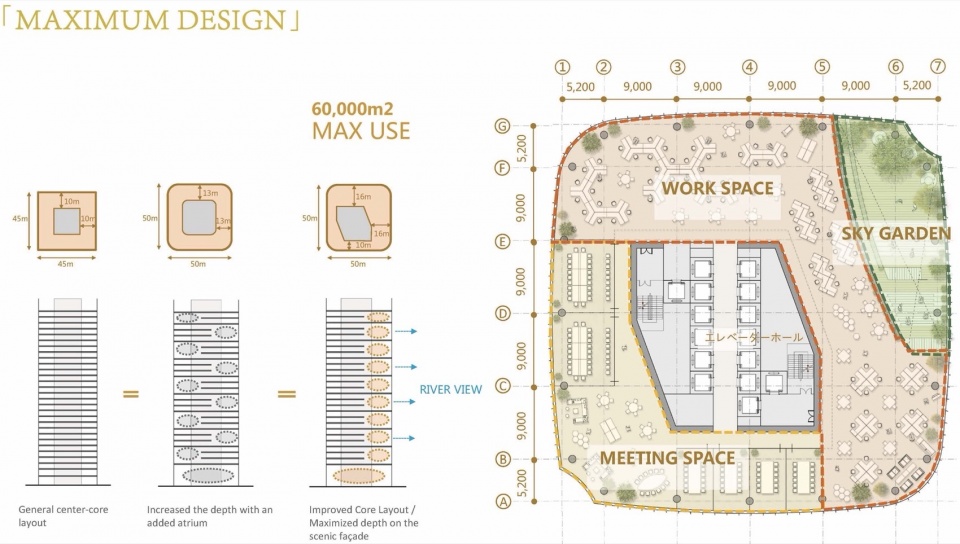
▼标准层核心筒,Eccentric central core on the reference floor © Nikken Sekkei
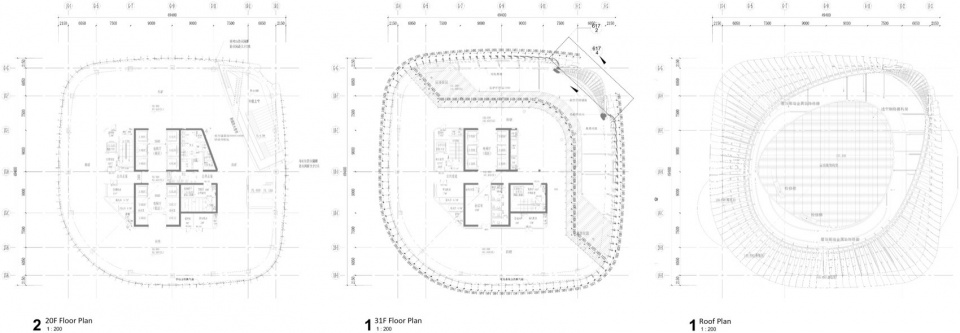
▼标准层及屋顶平面图,Reference floor plan and rooftop plan © Nikken Sekkei
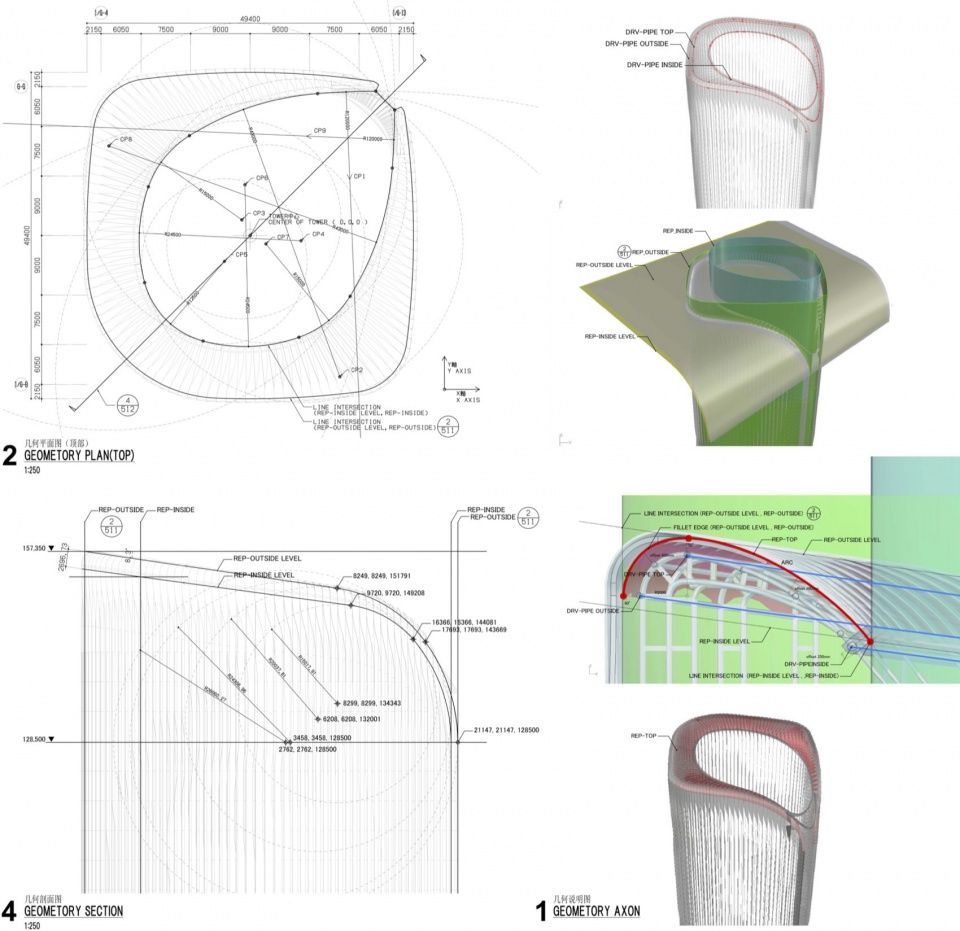
▼几何屋顶造型,Geometric roof shape © Nikken Sekkei
▼大厅剖面示意图,Seven-story stacked sky lobby © Nikken Sekkei
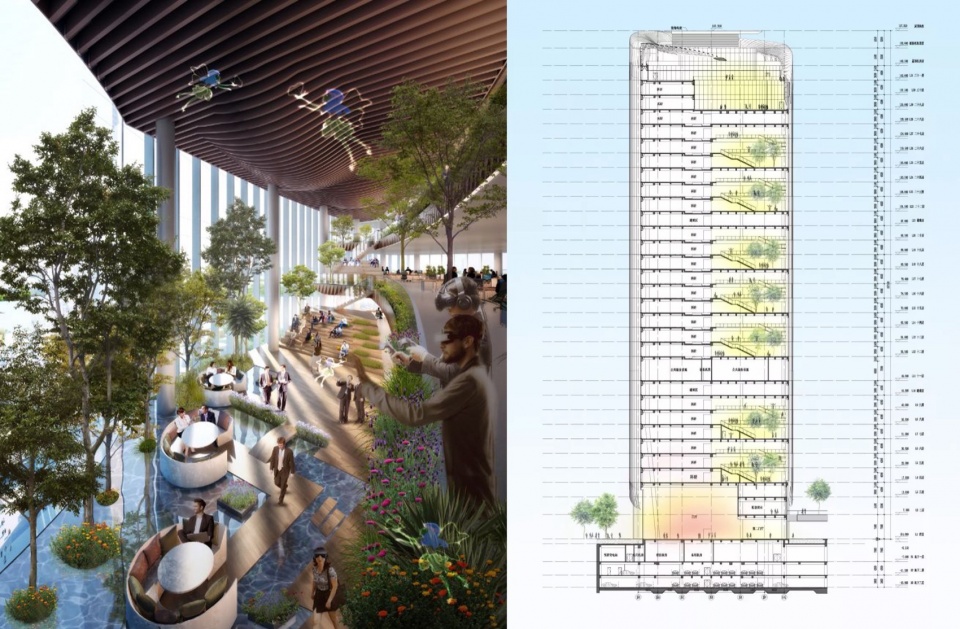
▼剖面图,Cross-section of entire building © Nikken Sekkei
项目名称(中文):星云1号大厦
项目名称(英文):Xingyun-1 Building
用途:办公、商业、其他
所在地(国、市、区):中国上海市徐汇区
用地面积(m2):13,000.6㎡
建筑面积(m2):78854.6㎡(施工图阶段)
层数:31F
檐口高度/最高高度(m):157.5m
主体结构:钢筋混凝土结构、钢结构
竣工年月:2023年9月
资料来源
业主(中文):上海建筑材料集团科技发展有限公司
业主(英文):Shanghai Building Material Group Technology Development Co., Ltd
主创设计:日建设计
主要业务范围:方案设计、外装初步设计
JV・共同设计・监理・顾问等:上海建筑设计研究院有限公司 (当地设计院)
施工单位:中国建筑第八工程局(China Construction Eighth division Co., Ltd.)
其他设计合作企业:建筑幕墙顾问:ALT Limited (艾勒泰建筑工程咨询上海有限公司)
照片来源1(中英):杨敏/mintwow(yangmin/mintwow)
照片来源2(中英):日建设计(Nikken Sekkei)
项目负责人信息
大久保康路:建筑设计总部 设计部门 设计主管
葛海丰:日建设计上海 设计部 主任
新井公平:建筑设计总部 国际设计部门
何佳琴:日建设计上海 设计部 高级项目经理


0

0